Why Project Zomboid Is More Popular Than Ever - And Still Unlike Every Other Zombie Game
Project Zomboid has become more popular than ever, breaking Steam records after years of multiplayer and engine improvements. Build 42 pushed the survival sandbox even further—and showed why its zombie apocalypse still feels unlike anything else in the genre.
Written by Zachery McKinney | Redacted Games
Last updated: August 17, 2026
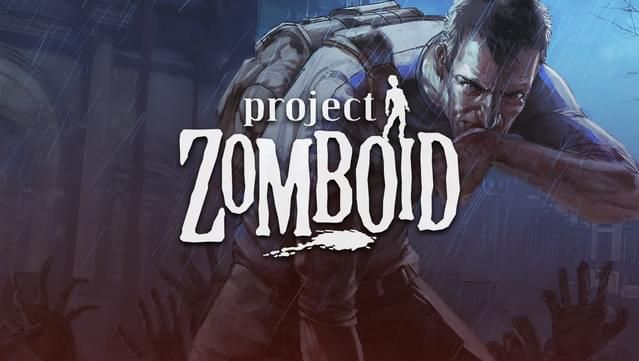
Project Zomboid has become more popular than at any point in its 13-year Steam history. Build 42.20 pushed the survival game to a record 124,995 concurrent Steam players on August 9, 2026, while roughly 80,000 were still playing when Redacted Games checked SteamDB on August 17. Its unlikely rise came from years of technical rebuilding, multiplayer improvements, modding, and a survival philosophy that still feels remarkably different from most zombie games.
TL;DRProject Zomboid reached a record 124,995 concurrent Steam players on August 9, 2026.The first enormous breakthrough came with Build 41 multiplayer in December 2021, after The Indie Stone and General Arcade replaced the game's notoriously rough old multiplayer architecture.Build 42.20 reached Stable on July 29, 2026, adding a substantially larger map, animals, basements, deeper crafting, new lighting, expanded survival systems and extensive technical work.Build 42 also continues moving important multiplayer systems server-side and improving multiplayer performance and reliability.Its longevity comes from something deeper than updates: Project Zomboid treats the zombie apocalypse as a simulation of living after civilization, rather than a backdrop for killing zombies.
There is something faintly absurd about Project Zomboid becoming one of 2026's biggest Steam stories.
Not because it doesn't deserve it.
Because this is a game that arrived on Steam Early Access in 2013, looks like somebody dropped The Sims into rural Kentucky shortly before everything went horribly wrong, and begins every character's life by essentially telling you that you're already dead.
Thirteen years later, Project Zomboid is setting records.
SteamDB recorded 124,995 simultaneous players on August 9, smashing the game's previous highs. On August 17, when Redacted Games checked the numbers, approximately 80,000 people were still in-game, with a 24-hour peak above 98,000. The SteamDB rating sat at 93%, backed by hundreds of thousands of user reviews.
Those aren't nostalgic tourists briefly revisiting an old indie curiosity.
Something much larger happened here.
The obvious explanation is Build 42.20, the enormous update The Indie Stone moved to the Stable branch on July 29. But that only explains the latest spike.
To understand why Project Zomboid could attract 125,000 concurrent players in 2026, you have to go back several years.
Because the game's rise was not really one explosion.
It was two.
And multiplayer sits right in the middle of both.
Why is Project Zomboid suddenly so popular?
Project Zomboid's current popularity is the culmination of years of growth rather than a sudden viral accident. Build 41 transformed its presentation and multiplayer experience in 2021, establishing a much larger permanent audience. Build 42 has now brought that audience back alongside new players with the largest expansion of its survival simulation in years.
The player chart tells a strange story.
For most games, launch is the high point. Marketing reaches maximum intensity, reviews arrive, streamers play it, everybody piles in, and the population gradually contracts.
Project Zomboid effectively did the opposite.
Its Steam version launched on November 8, 2013. More than a decade later, it has just recorded the highest concurrent-player count in its history.
The trajectory makes more sense when viewed around its major technical milestones:
| Era | What changed | Effect on Project Zomboid |
|---|---|---|
| 2013–2020 | Long Early Access development, older animation and multiplayer technology | Dedicated but comparatively niche survival audience |
| December 2021 | Build 41 stable release and rebuilt multiplayer | Massive breakout and new long-term player baseline |
| 2022–2025 | Mods, servers and Build 41 community mature | Game sustains a much larger audience than before |
| December 2025–2026 | Build 42 multiplayer testing and continued optimization | Foundation for another expansion |
| July 29, 2026 | Build 42.20 Stable | Huge influx of returning and new players |
| August 9, 2026 | Build 42 momentum peaks | 124,995 concurrent Steam players |
The interesting part isn't merely that the numbers increased.
It's what The Indie Stone had to rebuild before they could.
How did multiplayer change Project Zomboid?
Multiplayer changed Project Zomboid from an intensely personal survival sandbox into a game capable of generating stories between entire communities. The breakthrough came after The Indie Stone decided its old networking technology was not good enough for Build 41 and worked with General Arcade on a substantial multiplayer rewrite.
Old Project Zomboid multiplayer technically worked.
“Worked” was doing some heavy lifting.
The Indie Stone co-founder Chris Simpson later described the old technology as suffering from extreme server memory usage, map-streaming failures, severe rubber-banding and rough character movement. The team concluded that carrying those problems into Build 41 would undermine the animation and gameplay work being done elsewhere, so multiplayer architecture was substantially rewritten with General Arcade.
That decision cost time.
A lot of it.
In June 2021, The Indie Stone was openly saying that Build 41 multiplayer was not robust enough to survive the potentially enormous audience waiting for it. Rather than release it anyway and spend the next month putting out fires, the studio delayed multiplayer until it believed the experience could withstand the floodgates opening.
That's not especially exciting development work to market.
No new shotgun.
No cow.
No dramatic trailer shot of somebody jumping through a window.
But it may have been the most important work The Indie Stone ever did.
What happened when Build 41 multiplayer finally arrived?
When Build 41 multiplayer became publicly available in December 2021, Project Zomboid's audience expanded dramatically. The game jumped to roughly 64,000 concurrent players during the initial surge, while sales rose far beyond their previous baseline. The developers themselves connected the breakout directly to multiplayer.
Build 41 multiplayer testing opened on December 9 with dedicated-server and co-op support. The full Build 41 release followed later that month.
Then the chart went vertical.
GameDiscoverCo reported a roughly 64,000 concurrent-player high, with Project Zomboid entering Steam's top-grossing games. Chris Simpson said the studio had accumulated more than two million owners over the preceding decade, creating an enormous dormant audience that could suddenly return and bring friends with them.
That last part is easy to underestimate.
Multiplayer didn't simply make the same game playable by several people.
It changed what Project Zomboid could produce.
One survivor barricading a farmhouse is survival horror.
Eight survivors barricading a farmhouse becomes politics.
Someone is using too much food. Someone crashed the only working car. Someone insists the generator belongs indoors. Someone got bitten and is being suspiciously quiet about why they're wearing a jacket in July.
And then somebody leaves the oven on.
The zombies almost become supporting actors.
Why was Build 41 such a turning point?
Build 41 worked because multiplayer arrived alongside fundamental improvements to movement, animation, combat, audio, maps and presentation. The Indie Stone described it as feeling closer to a sequel than a normal patch. That combination made an old game considerably easier to recommend, watch and share.
This distinction matters.
It would be convenient to attribute the entire 2021 explosion to netcode.
The evidence supports multiplayer as a major catalyst, but Build 41 was much larger than that.
Animations were radically improved. Character movement changed. Combat felt more physical. Audio received substantial work. Louisville expanded the map. Foraging changed. The game's visual language became easier to understand.
And then those improvements became social.
That was the magic trick.
A beautifully simulated solo death can generate a good Reddit post.
A beautifully simulated multiplayer disaster can generate an hour-long YouTube video.
Content creators suddenly had an endless machine for producing stories. Dedicated servers could build communities. Roleplay groups could create rules and factions. Friends who would never voluntarily spend 100 hours organizing canned food could be dragged into Kentucky by somebody who already had.
The game became more watchable because it became more social.
And it became more social because the technology stopped fighting the premise.
What changed with Project Zomboid Build 42?
Build 42 expands Project Zomboid in almost every direction. The map has grown dramatically, buildings can extend underground and far higher than before, animals now inhabit the world, crafting supports much deeper long-term survival, lighting has been rebuilt, and technical changes create a stronger foundation for multiplayer and future development.
Build 42.20 reached the public Stable branch on July 29, 2026.
Calling it a content update undersells it.
The map's surface area has doubled. Existing towns have been extensively rebuilt, while new areas have appeared across Knox Country. The update includes around 1,400 unique buildings and 20,000 new tiles, according to The Indie Stone.
Then the game started going down.
Literally.
Technical improvements allowed the old height restrictions to be pushed much further, introducing procedural and handcrafted basements, bunkers and panic rooms. At the other extreme, Louisville buildings can now climb as high as 32 floors.
The zombie apocalypse finally discovered stairs.
Why do animals matter so much?
Build 42 introduces sheep, chickens, pigs, cows, rabbits, rats and deer. Players can hunt wildlife or maintain domesticated animals for resources including meat, milk, leather, eggs and manure.
It sounds like a farming expansion.
It isn't.
Animals help solve one of Project Zomboid's oldest conceptual problems: what happens after you've already survived?
Early survival has always been compelling. Find food. Secure a house. Get a weapon. Find a vehicle. Don't get bitten.
But an experienced player can eventually become comfortable.
Build 42 wants to make that comfort temporary—or at least complicated.
Crops have seasons. Animals require management. Food production becomes a system rather than a cupboard full of canned beans.
The apocalypse is slowly transitioning from looting civilization's corpse to building something after it.
That is a much bigger idea.
Why does Build 42's crafting overhaul matter?
Build 42 pushes Project Zomboid toward a genuine post-collapse economy. Blacksmithing, masonry, carving, knapping, food preservation and workstation-based crafting give long-running characters and multiplayer communities reasons to specialize after manufactured supplies become scarce.
Most zombie games are fundamentally about the emergency.
Project Zomboid increasingly wants to simulate what comes afterward.
That's why blacksmithing matters.
Not because every player has secretly dreamed of spending the zombie apocalypse discussing furnace technology.
The deeper crafting systems allow a server to move beyond scavenging.
A newly infected world should contain supermarkets, pharmacies, petrol stations, guns, cars and packaged food.
A world two years after civilization ended shouldn't.
Build 42 is trying to make both periods playable.
The Indie Stone explicitly describes one of Build 42's goals as allowing multiplayer servers to continue much further into the post-apocalypse, with deeper professions and community cooperation becoming more important as conventional resources disappear.
That's a fascinating direction because it turns progression sideways.
You're not unlocking the purple-tier assault rifle.
You're figuring out who knows how to make one particular tool everyone suddenly needs.
What did Build 42 change about multiplayer?
Build 42 continues Project Zomboid's shift toward more server-controlled multiplayer systems while addressing performance and synchronization problems associated with a more complicated simulation. The developers have specifically worked on server-side inventory authority, vehicle and map-chunk behavior, zombie culling, multiplayer stability and Sprinter support.
The multiplayer story didn't end with Build 41.
In some ways, Build 42 makes the networking problem harder.
There are more systems now.
More verticality. More crafting. More interactions. Animals with behavior to track. More complicated inventories. Vehicles moving between chunks. More persistent world state.
The Indie Stone identified moving multiplayer systems server-side as one of Build 42's core technical pillars, partly to give servers greater authority and make the game less exploitable.
Recent development has also specifically targeted zombie culling in multiplayer and map-chunk loading while driving, among other problems.
Then there are Sprinters.
Do Sprinter zombies work in Project Zomboid multiplayer now?
Build 42 has introduced multiplayer Sprinter support, although The Indie Stone has treated it cautiously. In April 2026, the developers described the multiplayer Sprinter option as a prototype and specifically asked players to report edge cases that appeared under heavy server loads.
That qualification matters because “fully flawless Sprinter networking” would overstate what the developers themselves have claimed.
Sprinters can now be enabled on multiplayer servers.
That alone changes the character of Project Zomboid.
Normal shamblers create pressure through numbers, noise and mistakes. You can often disengage, walk away and reconsider your increasingly poor life choices.
Sprinters remove the reconsidering part.
A multiplayer group accustomed to chatting while casually looting a neighborhood can suddenly be forced into much faster communication and much uglier decisions.
You don't need another zombie type with glowing eyes.
You need one zombie that can run.
How popular is Project Zomboid right now?
Project Zomboid is currently operating at historically exceptional player levels. SteamDB showed approximately 80,000 players online when checked on August 17, 2026, a 24-hour peak of 98,074 and an all-time record of 124,995 reached on August 9.
The current numbers deserve some context:
| Steam metric | August 17, 2026 snapshot |
|---|---|
| Players online when checked | 80,008 |
| 24-hour peak | 98,074 |
| All-time concurrent peak | 124,995 |
| Record date | August 9, 2026 |
| SteamDB rating | 93% |
| SteamDB daily-active-user rank | #16 |
Those live figures will obviously move after publication.
The important number is 124,995.
Early reports following Build 42.20 initially documented records around 79,000 and then 121,000 as the population continued climbing. SteamDB's updated historical data now puts the final record higher still.
This is not simply Build 42 producing a one-evening nostalgia spike, either. More than two weeks after the Stable release, tens of thousands of players remain in-game simultaneously.
For something that has spent most of its existence in Early Access, that's remarkable.
Why is Project Zomboid different from other zombie games?
Project Zomboid is different because killing zombies is not really its central objective. It simulates the mundane systems surrounding survival—hunger, fatigue, injuries, panic, weather, power, water, vehicles, farming, carpentry, weight, noise and human error—and allows those systems to create stories without requiring scripted missions.
There is a wonderfully mean streak running through Project Zomboid.
The game doesn't particularly care whether your death is cinematic.
You might get dragged into a horde after firing a shotgun in downtown Louisville.
Or you might climb through a window containing broken glass without removing it first.
Both are valid.
That refusal to make the apocalypse revolve around heroism separates Zomboid from much of the genre.
Project Zomboid isn't a zombie power fantasy
Plenty of zombie games eventually make the undead feel like resources.
Kill zombie.
Receive XP.
Upgrade weapon.
Kill stronger zombie.
Repeat until you're essentially an irritated superhero surrounded by corpses.
Project Zomboid never completely allows that transformation.
Experience helps. Good equipment helps enormously. Knowledge helps more than either.
But one bad decision can still kill a character who has survived for months.
The opening message tells you exactly what kind of game you're playing:
This is how you died.
Not if.
How.
The entire campaign is therefore about filling the space between those words and the eventual corpse.
Why does mundane survival make Project Zomboid more frightening?
Project Zomboid creates horror by making players responsible for ordinary survival. A zombie is dangerous, but so is exhaustion, darkness, a broken vehicle, an untreated wound, an alarm, bad weather or the simple mistake of entering a building without checking the exits. Fear comes from vulnerability rather than spectacle.
The isometric camera shouldn't be scary.
After enough time with Project Zomboid, a closed bathroom door absolutely is.
That's good horror design.
The game teaches you that danger is rarely isolated. One mistake creates another.
You break a window.
The noise attracts zombies.
You cut your hand climbing through.
Your weapon swings slower because you're injured.
You panic.
You retreat to the car.
The engine doesn't start.
Now six unrelated simulation systems have accidentally written a horror scene.
There was no scripted sequence.
No monster closet.
No developer deciding this was the exact moment the player should be frightened.
You did it to yourself.
That's Project Zomboid.
Why does the new lighting system matter?
Build 42's lighting overhaul makes darkness behave more naturally. Light can propagate through doors and windows, interiors react more realistically to outside illumination, and nighttime spaces can become genuinely difficult to read. The technical upgrade reinforces Project Zomboid's preference for environmental vulnerability over scripted horror.
This is exactly the sort of feature that sounds cosmetic until you remember what game we're discussing.
In Project Zomboid, seeing three meters farther can determine whether you live.
The old room-based lighting model had obvious limitations. Build 42 replaces it with a system capable of light leaking through openings and interacting more naturally with interior spaces. The developers have also rebuilt lighting across the map to make nights darker and spaces more believable.
That makes a flashlight more important.
Which makes batteries more important.
Which makes finding batteries important.
And suddenly an engine rendering improvement has altered your grocery list.
Few games are better at that chain reaction.
Why has Project Zomboid lasted when the zombie boom didn't?
Project Zomboid survived changing trends because it was never built around the novelty of zombies alone. Zombies provide pressure, but the deeper attraction is the sandbox underneath them. Mods, multiplayer communities, customizable rules and interconnected survival systems allow players to continually create new scenarios without waiting for scripted content.
Remember how many zombie games there were in the early 2010s?
The industry practically couldn't move without tripping over an infected person.
The genre became saturated because zombies were often the product. Put undead enemies into an otherwise familiar action game and you had the pitch.
Project Zomboid made zombies the condition.
That's different.
Remove the zombies entirely and an enormous amount of the game still functions: farming, building, fishing, hunting, vehicles, crafting, injuries, weather, exploration, cooking, electricity and now animal husbandry.
The undead are what make those systems desperate.
This gives Project Zomboid room to grow without endlessly inventing larger mutations.
Build 42 doesn't need a 40-foot zombie boss.
It can add a cow.
Somehow the cow makes the apocalypse deeper.
How important is the Project Zomboid modding community?
Modding has become one of Project Zomboid's major longevity engines. Steam Workshop support allows players to radically expand vehicles, maps, equipment, interfaces, professions and game rules, while The Indie Stone continues designing new systems with modders explicitly in mind.
The four-year gap between major Stable builds could have been disastrous for another game.
Project Zomboid had the Workshop.
That meant the community could keep filling gaps itself.
Want more vehicles? Done.
Different maps? Done.
Weapons? Clothing? Quality-of-life changes? New traits? Interfaces? Entirely different server experiences?
Somebody has probably already made it.
More importantly, The Indie Stone doesn't seem to regard modding as something players are doing to its game.
It treats modding as part of the game.
Build 42 was designed in part to give modders deeper systems to manipulate, and the post-Stable roadmap includes updated mapping and animation tools intended to give creators greater control.
That creates a useful loop.
The developers make systems.
Players misuse them creatively.
Developers see what people actually want.
The game expands.
Repeat for thirteen years.
Apparently it works.
Is Project Zomboid's long Early Access development actually an advantage now?
Project Zomboid's unusually long development has obvious drawbacks, particularly for players still waiting for major promised systems such as NPC survivors. But the same timeline has allowed The Indie Stone to rebuild foundational technology instead of abandoning it, while an active community continually generates new ways to play.
Thirteen years of Steam Early Access is not something most studios would put on a billboard.
There are fair criticisms here.
Development is slow. Major builds take years. Features that players have discussed for ages remain somewhere beyond the horizon.
NPC survivors are the obvious one.
But Project Zomboid has reached an unusual point where age works differently.
The game isn't being kept alive through seasonal cosmetics and a content treadmill.
Its foundations are still being altered.
Build 41 rebuilt character presentation and multiplayer.
Build 42 changes the map technology, lighting, crafting, farming, animals and multiplayer architecture.
Those are not maintenance patches.
They're invasive surgeries.
And every time the patient wakes up, more people seem to be standing around the hospital bed.
What happens after Build 42?
The rest of 2026 will focus partly on supporting Build 42 through hotfixes, optimization, modding support and requested improvements. The Indie Stone has also said later major builds remain ahead, with NPC technology associated with Build 43 and beyond rather than something players should expect immediately.
Build 42.20 becoming Stable isn't the end of Build 42.
It's when the largest test begins.
The Indie Stone plans a Build 42 Support Update later in 2026 focused on optimization, additional modding support, technical debt and player-requested polish. The developers also plan to release updated mapping and animation tools after the immediate Stable hotfix period.
That makes sense.
Moving from an opt-in Unstable audience to the entire Steam population creates a much larger pool of hardware configurations, server setups, mods and bizarre player behavior.
If there is a way to break a survival simulation, several thousand Steam users will eventually find it.
NPCs remain further away.
The studio has shown pieces of its AI and behavior-development tools, but Build 43 remains future work rather than the next imminent content drop.
That may frustrate players who have already waited years.
Still, Build 42 reveals why NPCs could matter so much.
The game is increasingly capable of supporting a world where survival extends beyond the initial disaster.
Animals create food production.
Crafting creates professions.
Specialization creates communities.
Server-side systems create more authoritative persistent worlds.
NPCs would fit into that ecosystem very differently now than they would have ten years ago.
What Project Zomboid's popularity actually tells us
There is a tempting lesson here about perseverance.
Keep updating your indie game for thirteen years and eventually 125,000 people will turn up.
Probably don't put that in the business plan.
The more useful lesson is that Project Zomboid became more popular as The Indie Stone made its underlying idea easier to experience.
Build 41 didn't suddenly invent Project Zomboid. The weird, detailed survival simulator had already existed for years.
It removed barriers around it.
Better animation made the simulation readable.
Better multiplayer made it social.
Dedicated servers made it communal.
Mods made it practically inexhaustible.
Build 42 is now extending the other end of the equation. Instead of asking only how somebody survives the first frantic weeks, Project Zomboid is becoming increasingly interested in what a world looks like when canned food runs out, farms matter, people specialize and civilization becomes something players have to construct themselves.
That is also why comparing it with most zombie games misses the point.
Project Zomboid isn't successful because it has better zombies.
It is successful because the zombies are only the beginning of the problem.
A dead civilization leaves behind houses, cars, supermarkets and weapons. Eventually the fuel degrades, electricity disappears, food spoils and easy supplies vanish.
Then what?
After thirteen years, Project Zomboid is finally becoming big enough—and technically capable enough—to explore that question properly.
The irony is perfect.
A game that begins by promising your death has turned out to be extraordinarily difficult to kill.
External Sources
The Indie Stone — Build 42.20 Features Overview
Primary source for animals, map expansion, crafting, lighting, basements, verticality and other Build 42 features. Accessed: August 17, 2026.
The Indie Stone — Project Zomboid Build 42.20 Released
Primary confirmation of the Stable Build 42.20 release. Accessed: August 17, 2026.
The Indie Stone — Build 41 Released / Multiplayer development
Primary sources for Build 41's technical overhaul and multiplayer release. Accessed: August 17, 2026.
SteamDB — Project Zomboid Steam Charts
Used for the August 2026 live population and verified 124,995-player all-time record. Accessed: August 17, 2026.
GameDeveloper / GameDiscoverCo — Project Zomboid's 2021 multiplayer breakout
Includes contemporaneous comments from The Indie Stone co-founder Chris Simpson concerning the multiplayer rewrite, previous networking problems and sales/player growth. Accessed: August 17, 2026.
Author
Zachery McKinney
Writer, Redacted Games
Zachery McKinney writes gaming news and analysis for Redacted Games.
Reviewer stamp: Redacted Games editorial review
Last updated: August 17, 2026
Redacted Games examines gaming stories beyond the announcement itself—looking at the design choices, technical decisions, industry pressures and player behavior that explain why a game succeeds, struggles or changes over time.