SAND: Raiders of Sophie Player Count: What Actually Happened?
SAND surged past 41,000 concurrent players, then stumbled through server issues, cheating, and broken updates. Now the real question is whether recent fixes can stabilize its Early Access community.
Written by Zachery McKinney | Redacted Games
Last updated: August 17, 2026
SAND: Raiders of Sophie has lost a large share of its launch-week concurrent audience, falling from an all-time Steam peak of 41,679 players on July 3 to a much smaller daily population in August of 9,608. But the decline is more complicated than “the game is dying.” Server failures, broken updates, cheating, extraction-threatening bugs, and the normal cooling of Early Access hype have all shaped the drop.
TL;DRSAND peaked at 41,679 concurrent Steam players on July 3, 2026 to an average in August of 9,608.Its Server Slam exposed infrastructure problems severe enough to delay Early Access from June 10 to June 22.Update #2 created connection and matchmaking problems and had to be rolled back shortly after deployment.Cheating became serious enough that developers temporarily disabled enemy Trampler capturing while protections against no-clip and teleportation exploits were developed.The player count has fallen sharply from launch, but thousands are still playing and Update #7 shows Hologryph and TowerHaus are continuing to attack the problems that drove some of that churn.
There is an easy version of the SAND: Raiders of Sophie story.
A game launches. Streamers pile in. Steam numbers explode. A month later, most of those players are gone. Someone posts a SteamDB chart with a red arrow on Reddit, and the funeral begins.
SAND deserves a more careful reading.
Its decline is real. It would be ridiculous to pretend otherwise. But SAND also had one of the messier relationships with scale an extraction shooter could have during its first weeks: servers overwhelmed before launch, another delay, a pivot back into Early Access, a patch rollback, persistent technical complaints, duplication exploits, and cheaters attacking one of the game's most distinctive systems.
That combination matters because SAND is not simply asking players to lose a deathmatch and queue again. It asks them to invest in a walking mechanical home, fill it with equipment, venture into a hostile PvPvE desert, and accept that another crew might take everything.
When the game itself becomes another threat to that investment, the psychology of extraction changes.
And that may be the most useful way to understand the SAND: Raiders of Sophie player count.
Why did the SAND: Raiders of Sophie player count drop?
The player-count decline appears to be the result of several overlapping forces rather than one catastrophic event. Normal post-launch attrition played a role, but SAND also spent its first weeks dealing with server instability, an update rollback, exploits, cheating complaints, and bugs affecting a game built around high-risk progression.
SteamDB records SAND at an all-time high of 41,679 concurrent players on July 3. By August 17, the live population was dramatically below that record; the SteamDB snapshot checked for this article showed an 8,474-player live count and a 10,940-player 24-hour peak. Those numbers will move hour by hour, but the direction from July's high is obvious.
That is a significant decline.
It is not, by itself, proof of terminal collapse.
Concurrent-player charts are especially seductive because they turn a complicated product into one clean line. What they cannot tell you on their own is why somebody stopped logging in. One person may have quit over cheating. Another finished what they wanted to accomplish. Somebody else went back to Tarkov. Another may simply be waiting for three patches and a Discord message saying the servers are finally behaving.
With SAND, there is unusually strong evidence that technical friction was part of the story because the warning arrived before the game was even released.
How did the Server Slam expose SAND's first major problem?
The Server Slam revealed that SAND's backend could not reliably handle the audience trying to play it. Publisher tinyBuild acknowledged that the existing server structure could not serve enough players reliably, and the planned June 10 release moved to June 22 while the team worked on stabilization.
This wasn't a launch-day surprise hidden behind vague wording about “unexpected demand.”
The test did exactly what a stress test is supposed to do. It stressed the thing until something broke.
According to tinyBuild's announcement reported at the time, tens of thousands entered the Server Slam and more than half experienced connectivity problems at the higher population. That forced the developers to confront a basic problem: SAND had attracted more people than its server architecture could comfortably support.
The original June 10 target was abandoned. The game would instead arrive June 22, and the release strategy moved back to Early Access rather than 1.0.
There's an irony here.
The Server Slam was evidence of demand. A game nobody wants to play does not melt its own infrastructure.
But demand becomes a liability when the first experience for thousands of curious players is a login error, broken lobby, stalled connection, or evening spent staring at something that isn't the desert.
For a new multiplayer game, that first impression is expensive. Steam has no shortage of alternatives sitting one click away.
Did Update #2 make the player-count problem worse?
Update #2 became a particularly damaging moment because a patch intended to improve the game introduced connection problems severe enough for the developers to roll it back on July 2. The update was redeployed after the immediate issue was addressed, but it reinforced an existing perception that SAND's infrastructure remained fragile.
This is where the sequence gets awkward.
SAND had already demonstrated that player volume could expose weaknesses in its networking stack. Then, less than two weeks after the Early Access launch, Update #2 landed and players again ran into connection and queue problems. tinyBuild pulled the update while the team investigated.
The developers managed to get it redeployed relatively quickly, and the timing did not stop SAND from climbing beyond 40,000 concurrents immediately afterward. PC Gamer reported that the game had also crossed 300,000 copies sold around this period.
That last detail matters.
It prevents us from constructing an overly tidy story in which Update #2 “caused the player count to collapse.” The historical data does not support that simple sequence. SAND's all-time concurrency record actually arrived on July 3, after the July 2 rollback drama.
The better interpretation is cumulative.
A broken update does not need to empty the servers instantly to hurt retention. It can become one more reason for a player who has already endured launch problems to think, I'll come back later.
Early Access buys a studio patience.
It does not buy unlimited patience.
Why are bugs more damaging in an extraction shooter?
Technical problems carry unusual weight in extraction games because failure has economic consequences inside the game. Disconnects, loading problems, desync, or broken interactions are not merely annoying when equipment and progression are at risk; players can perceive them as the game invalidating the time they invested before the failure occurred.
That difference sounds small until you've watched an extraction community turn on a game.
Losing a firefight can be frustrating, but there is at least a story attached to it. You pushed the wrong angle. The other crew had better positioning. Somebody landed the shot.
Fine. Queue again.
Losing because the server refuses to cooperate feels different. There is nothing to learn from it.
tinyBuild's support documentation has continued to track problems including players becoming stuck in clouds or infinite loading states, while patches have targeted Trampler, respawn, lag, interaction, and connectivity issues.
That doesn't establish that every lost inventory reported on Reddit was caused by the servers. Player anecdotes should not be treated as telemetry.
It does explain why the complaints become emotionally charged.
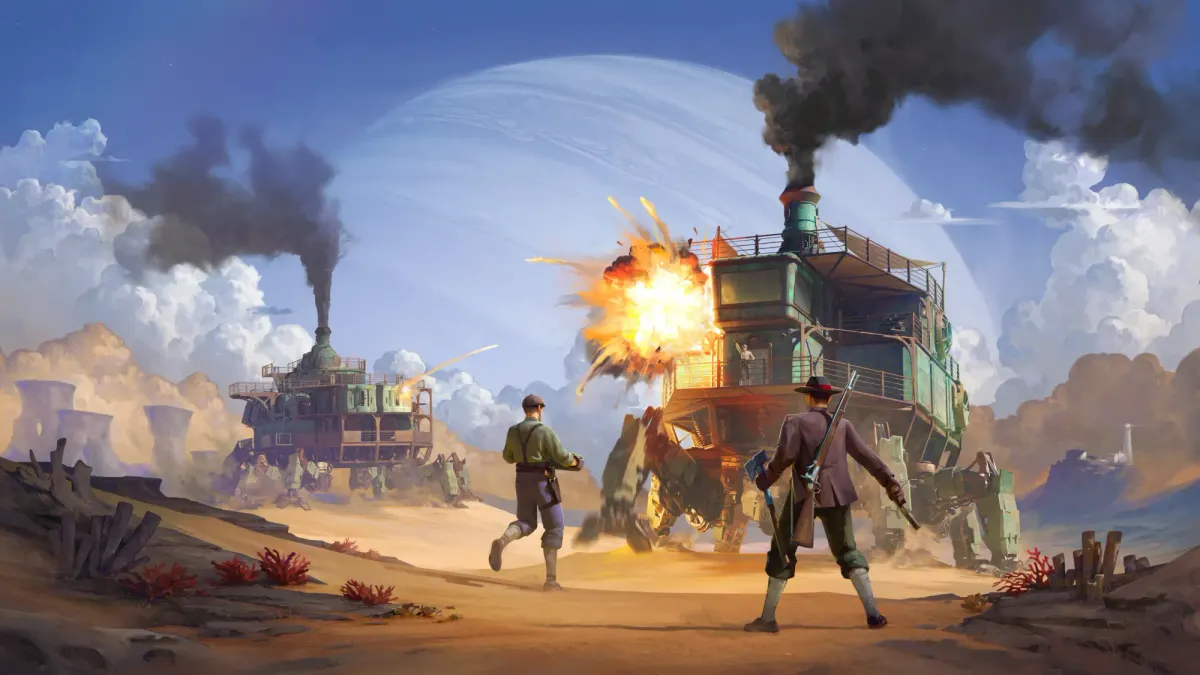
SAND's core object is the Trampler, a massive customizable walking base used for transportation, combat, storage, and survival. The official description makes clear that these machines are meant to become personal mobile fortresses rather than disposable match vehicles.
You add compartments. You arrange equipment. You carry resources. You learn how the machine moves.
Then you take the whole contraption into a PvPvE sandbox where somebody else would very much like what is inside it.
That is a great foundation for tension.
It also means reliability is part of game balance, whether developers intended it to be or not.
How serious was cheating in SAND: Raiders of Sophie?
Cheating became serious enough that the developers temporarily removed a core PvP mechanic. In July, Trampler capturing was disabled while the team worked on protection against no-clip and teleportation exploits, directly confirming that these cheats had become a significant design and security problem rather than mere community suspicion.
Cheating is a problem in almost every competitive PC game. What makes it unusually destructive here is what can be cheated.
In a normal shooter, an aimbot can ruin your round.
In SAND, the player has a mobile base.
The game's boarding and ownership systems create the possibility of stealing an enemy crew's Trampler—a nasty, memorable outcome that fits the fantasy perfectly. But reports of players using no-clip and teleportation exploits raised a much uglier possibility: bypassing the physical battle required to get inside the machine in the first place.
Hologryph and tinyBuild responded in July by temporarily disabling Trampler capture while reliable protection against those exploits was developed.
Think about what that means from a design perspective.
The anti-cheat problem became severe enough that the safest response was not merely changing detection thresholds or issuing another warning. The developers removed one of SAND's defining player-interaction systems.
That's a painful trade.
Leave capturing enabled, and exploiters can weaponize it.
Disable capturing, and legitimate players lose one of the most exciting reasons to board another machine.
There was no clean answer.
Why does cheating hit extraction games harder?
Cheating damages extraction shooters at the level of trust. Players must believe that losing gear, resources, and position is primarily the result of legitimate risk. Once they begin assuming an impossible death or stolen vehicle came from an exploit, the game's entire risk-reward structure becomes harder to trust.
This is where an anti-cheat problem becomes a retention problem.
The worst thing a cheater steals isn't the rifle.
It's certainty.
Once enough suspicious encounters happen, every strange death begins to look dirty. A physics bug becomes a possible exploit. An excellent flank becomes wallhacks. A player appearing somewhere unexpected becomes teleporting.
Community discussion from the period shows exactly that suspicion around no-clip and teleporting, while official action confirms the developers considered those exploit categories serious enough to alter Trampler capturing.
And when an extraction game reaches that point, anti-cheat is no longer simply a security feature.
It is part of the economy.
Did the developers actually fix the Trampler capture problem?
Trampler capturing eventually returned. Update #6 restored the mechanic after its temporary removal, while subsequent patches continued adding anti-cheat and Trampler-related fixes. That does not mean cheating has disappeared, but it shows the developers were able to restore a system they previously considered too vulnerable to leave active.
That is one of the more encouraging developments in SAND's first two months.
The easy solution would have been to leave capture disabled for an indefinite stretch while quietly working on security.
Instead, Update #6 brought it back. Patch tracking for the game explicitly notes that Trampler capture returned.
Update #7 then continued the less glamorous work.
The patch added the long-requested in-game ping system, refactored character death behavior, fixed a bug that could cause a character to respawn outside the Trampler, and added audio when someone interacts with the vehicle's ownership device.
None of that sounds as exciting as a new biome or giant boss.
Right now, it may be more important.
SAND does not appear short on interesting ideas. A walking, customizable fortress crossing a hostile alternate-history desert is already a strong elevator pitch.
The question is whether the systems underneath that fantasy can become dependable enough that players stop thinking about them.
Good networking is invisible.
Bad networking becomes the game.
Is SAND: Raiders of Sophie dying?
There is not enough evidence to call SAND: Raiders of Sophie a dead game. Its concurrency has fallen substantially from the 41,679 launch-period peak, but SteamDB still records thousands of simultaneous players, and the developers remain on an active update cadence. The healthier question is whether that remaining audience stabilizes over the next several months.
“Dead game” has become one of gaming's least useful measurements.
A multiplayer game is either the biggest thing on Twitch this week or apparently lying face-down in a ditch.
Reality has more settings.
Here is the Steam picture as of the August 17 snapshot used for this article:
| Metric | Confirmed figure |
|---|---|
| Early Access release | June 22, 2026 |
| All-time Steam peak | 41,679 |
| Date of all-time peak | July 3, 2026 |
| SteamDB snapshot when checked | 8,474 playing |
| 24-hour peak when checked | 10,940 |
| SteamDB user-rating classification | Mixed |
Player counts are live metrics and will change after publication.
A fall from 41,679 to a roughly five-figure daily peak is substantial. Nobody should massage that into growth.
But a paid Early Access extraction shooter sustaining that many simultaneous players is also not the same thing as an empty matchmaking ecosystem.
The real danger is the next step.
Does SAND find a floor?
Or does every new floor turn into another staircase downward?
That distinction will tell us considerably more than comparing August directly against a launch spike amplified by Summer Game Fest attention, curiosity, streamer exposure, and a rush of new buyers.
How much of SAND's decline is actually normal?
Some decline was almost inevitable. Multiplayer releases commonly reach their largest audience during a concentrated launch window and then shed players as curiosity fades. What makes SAND noteworthy is not that the population dropped, but that several avoidable technical and security problems gave players additional reasons to leave during that normalization period.
This distinction is easy to lose when looking at charts.
Suppose SAND had launched flawlessly, hit 41,679, and settled at 15,000 a month later.
The line would still look brutal.
That's the problem with using peak concurrency as the denominator for everything that follows. Peaks are events. Sustainable populations are habits.
SAND's launch also arrived with genuine momentum. The game grossed a reported $1 million in its first 12 hours, despite technical disruption and DDoS attacks around launch. A little over a week later, tinyBuild CEO Alex Nichiporchik said the game had crossed 300,000 copies sold.
Those are not the numbers of a project nobody noticed.
What the developers now have to discover is how many buyers actually want SAND to become one of their regular games.
That's a much harder problem than selling the fantasy once.
What makes the SAND player-count story different from a normal launch decline?
The unusual part is that SAND's strongest idea and its biggest retention risks are closely connected. Persistent customizable Tramplers make victories and losses meaningful, but they also amplify the damage caused by desync, cheating, boarding exploits, and server failures. The more players care about their machine, the less tolerance they have for losing it unfairly.
This is the design tension sitting beneath almost every complaint.
If SAND were a disposable 20-minute shooter, some of its early problems would still be irritating. They just wouldn't carry the same weight.
Instead, the Trampler is part vehicle, part inventory, part base, part weapon platform.
It gives the game identity.
That also turns the game's infrastructure into something players experience emotionally.
Imagine two losses.
In the first, another crew tracks you across the dunes, knocks out a weapon, forces its way aboard, and eventually takes control of your machine.
That hurts.
It's also the kind of story people tell afterward.
In the second, somebody appears inside a location they should not have been able to reach because an exploit bypassed the fight.
Same loss on paper.
Completely different relationship with the game afterward.
The developers need more of the first type of frustration and as close to zero of the second as technically possible.
That's the whole challenge.
Are the recent SAND updates helping?
The recent patches are pointed at the right problems: anti-cheat protections, Trampler interactions, respawn behavior, lag-related logic, squad communication, and quality-of-life issues. What cannot yet be established is whether those fixes will produce sustained player growth. Retention requires both technical improvement and enough time for departed players to believe the improvement is real.
Update #7 is a good example of where development priorities appear to be.
The new ping system is hardly revolutionary in a cooperative shooter, but that's almost beside the point. Players asked for a cleaner method of communicating and the game now has one. The patch also went back into death positioning, respawning, ownership interactions, turrets, Trampler behavior, and other practical problems.
This is what SAND probably needs more than spectacle.
Not another promise that the game will eventually be huge.
Fewer reasons to close it tonight.
The development team has already shown that it will make drastic interventions when necessary. Delaying the game because the servers could not support demand was one. Rolling back Update #2 was another. Removing Trampler capture was probably the clearest. Restoring that system after additional protection was equally important.
Whether players reward that responsiveness is another question.
A studio can fix the problem.
It cannot patch a player's memory.
What should players watch next?
The next meaningful signals are not another single-day Steam spike. Watch whether SAND can establish a stable concurrency floor, whether cheating complaints remain manageable after Trampler capture's return, whether networking patches reduce high-cost failures, and whether future content gives lapsed players a reason to test the game again.
Four signals matter most:
- The population floor. A launch peak tells us how many people were interested. The next several months tell us how many want to stay.
- Cheating after capture returned. Restoring the mechanic is only a victory if legitimate players can trust it.
- Server reliability. Queueing, desync, loading, and interaction failures have to become exceptions rather than part of the expected experience.
- Reasons to return. Bug fixes stop bleeding. New systems, locations, enemies, progression, and meaningful balance changes are what can bring somebody back.
The temptation will be to call every upward weekend a comeback and every weak Tuesday another collapse.
Neither is useful.
Watch the baseline.
So what does the SAND: Raiders of Sophie player count really tell us?
SAND had enough demand to expose its infrastructure before release, enough momentum to sell hundreds of thousands of copies, and enough appeal to reach 41,679 concurrent Steam players. It also reached that audience before some of its most important systems were ready for the abuse, scale, and edge cases that a large PvP community inevitably produces.
That combination created the chart we have now.
Some players were always going to leave.
Technical failures gave others a reason.
Cheaters gave some a better reason.
And Early Access gives Hologryph and TowerHaus the opportunity to convince them that leaving does not need to be permanent.
The more interesting question is no longer whether SAND can attract players. It already proved that.
It's whether the game can become trustworthy enough to keep them.
For an extraction shooter, trust may be the most valuable loot in the entire desert.
External Sources
SteamDB — SAND: Raiders of Sophie Steam Charts
Used for verified concurrency peak, live/24-hour snapshot, reviews, developer/publisher metadata, and release data. Accessed: August 17, 2026.
tinyBuild / SAND Support — Known Issues
Used to verify officially acknowledged technical problems and troubleshooting information. Accessed: August 17, 2026.
PC Gamer — SAND launch/server reporting and 300,000-sales report
Used for context surrounding the Server Slam, delayed Early Access release, Update #2 problems, and publisher-reported sales. Accessed: August 17, 2026.
SAND patch/update reporting and patch tracker
Used to verify Update #6 restoring Trampler capturing and Update #7's ping, respawn, ownership and quality-of-life changes. Accessed: August 17, 2026.
Author
Zachery McKinney
Writer, Redacted Games
Zachery McKinney covers gaming news and analysis for Redacted Games. This byline intentionally avoids adding unverified credentials, years of experience, or personal claims that have not been supplied by the author.
Reviewer stamp: Editorially reviewed for source attribution and factual distinction between confirmed events, community reports, and analysis.
Last updated: August 17, 2026.
Branded Authority Note
Redacted Games covers gaming news with an emphasis on what happens beyond the headline: why decisions matter, how design and business pressures collide, and what players should actually watch next. Our reporting distinguishes confirmed information from community reports and editorial interpretation.